28 September 2026 · 12 min read
Making pizza dough: the part the oven cannot do for you
A five-hundred-degree oven turns good dough into something special and bad dough into a burnt cracker. That is the honest split: the oven decides how fast it goes, the dough decides nearly everything else. The good news is that dough has four ingredients and that the hardest part of it is patience.
Four ingredients, and why you weigh them
Flour, water, salt, yeast. That is all of it. Oil and sugar do not belong in Neapolitan dough. They soften and brown it, which helps in a 250-degree domestic oven and works against you in a pizza oven at 450.
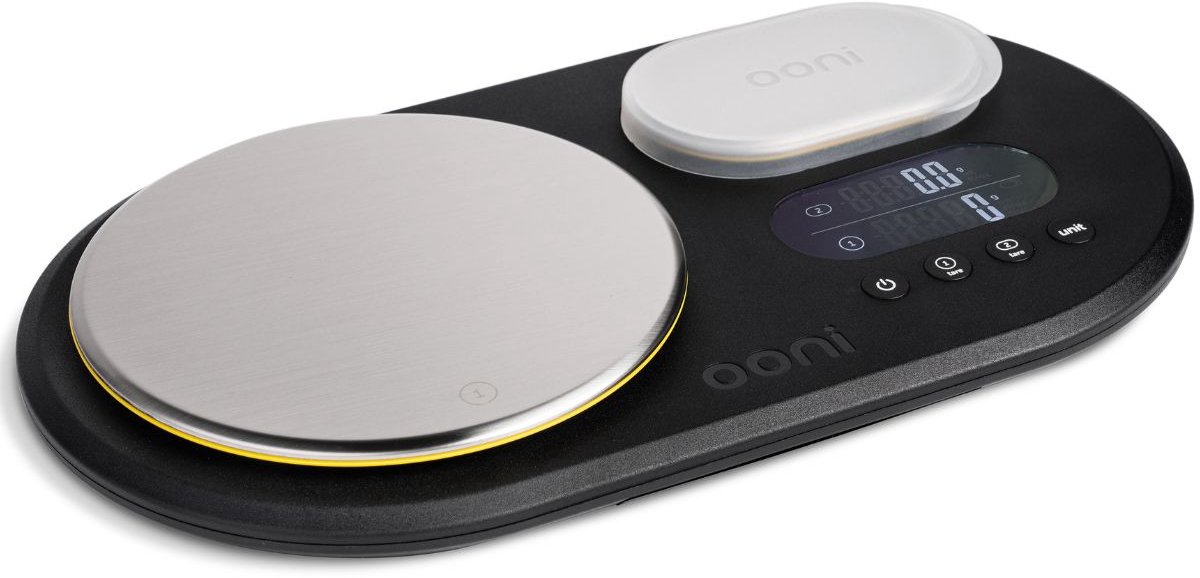
Weigh everything, the water included. A cup of flour can vary by forty grams depending on how hard you press it in, and in dough forty grams is the difference between supple and sticky. A kitchen scale is not a refinement here, it is the minimum.
Baker’s percentages make recipes comparable: everything is expressed as a percentage of the flour. Flour is therefore always a hundred percent, and a dough with 620 grams of water per kilo of flour is called 62% hydration.
- Flour 100%, water 60–65%, salt 2.5–3%, yeast 0.1–0.3% fresh.
- For four pizzas: 600 g flour, 380 g water, 17 g salt, 1 g fresh yeast.
- Weigh the water. Millilitres happen to equal grams here, but the scale is out anyway.
Which flour, and what a W rating means
For dough that stands overnight or longer, you want flour that can hold up. Italian tipo 00 is the best known, but the number says nothing about strength. It only says how finely it is milled. What matters is protein, and on Italian bags the W rating.
Roughly: W260–320 is what you want for a rise of eight to forty-eight hours. Lower and the dough collapses before you bake it; higher is meant for rises measured in days. If there is no W on the bag, look at protein: eleven to thirteen grams per hundred does about the same job.
Ordinary strong white bread flour is fine for a dough of a few hours. If you want the long cold rise in the next section, buy flour made for it. This is the one ingredient where the brand genuinely matters.
Hydration: what it buys and what it costs
Hydration is the water percentage, and it is the dial people turn up too fast. More water gives an airier crumb and bigger bubbles in the cornicione. More water also gives dough that sticks to everything and has to leave your peel in one movement you have not learned yet.
Start at 60%. That is firm, it opens easily and it slides off the peel. Once that has gone well three times in a row, move to 65%. Above 70% it becomes a different craft and needs flour that can carry it.
The common mistake is starting at 70% because a video did, then concluding the oven is at fault when the pizza welds itself to the peel.
- First time: 60%. That is 600 g of water per kilo of flour.
- Once it goes well three times: 63–65%.
- Above 70% only with strong flour and a practised hand.
Time is the ingredient that makes flavour
Dough that is ready in two hours tastes of yeast and flour. Dough that has spent a day in the fridge tastes of bread. That difference does not come from better flour but from time: slow fermentation builds flavour a fast rise simply cannot reach.
The practical way is a cold rise. Knead, leave it an hour at room temperature, divide into balls and put them in the fridge for twenty-four to forty-eight hours. Take them out two to three hours before baking so they come up to temperature.
That is why there is so little yeast in the recipe above. One gram of fresh yeast per 600 grams of flour looks like too little and is exactly right when the dough gets a day. More yeast does not make it better, only faster and flatter in flavour.
It is also why pizza is a planned meal rather than a spontaneous one. Anyone who wants pizza tonight should have made dough yesterday.
- Same day: possible, tastes of nothing in particular.
- 24 hours cold: the biggest return per minute spent.
- 48 hours cold: a little more again, and the ceiling for most flour.
Kneading, or not kneading
Kneading builds the gluten network that holds the bubbles. Ten minutes by hand is enough; in a mixer four to five minutes on low. You are done when the dough is smooth and springs back when you push it.
You can also mostly skip it. Mix flour and water, leave it twenty minutes, and the flour takes up the water and forms gluten without your help. That is autolyse. Add salt and yeast afterwards and knead a few minutes more. Less work, same result.
Salt goes in after the autolyse, because salt slows both water uptake and the yeast. Do not hold yeast and salt in the same hand: direct contact kills some of the yeast.
Balling up and letting them sit
Divide into balls of 230 to 260 grams for a twelve-inch pizza, 280 to 300 for sixteen. Weigh them, because a ball fifty grams heavier becomes a thicker base and bakes differently.
Ball each one tightly: fold the edges to the middle, turn it over, and roll it under your palm across the worktop until the top is taut. A tight ball holds its shape and opens evenly; a slack one spreads into a pancake.
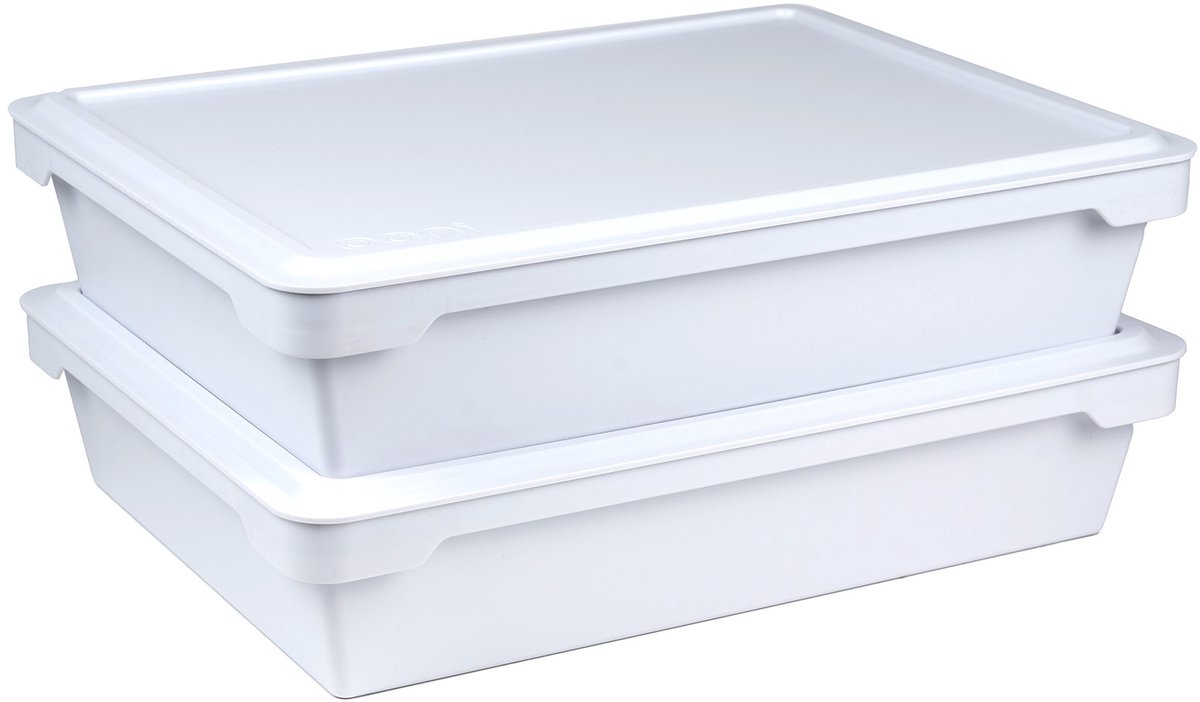
Let the balls sit covered, with room between them. That is exactly what a dough box is for, though a sealed plastic box from the kitchen cupboard does the identical job.
Opening it without pushing the air out
The whole reason you waited a day is the gas trapped in that dough. A rolling pin pushes it back out in five seconds, and then you are baking a cracker with tomato on it.
So use your hands. Put the ball in flour, press with your fingertips leaving about a centimetre untouched at the edge. That becomes the cornicione and the air has to stay in it. Then work from the middle outwards, turn the disc a quarter turn and repeat, until it is big enough.
Lift it over the backs of your hands and let gravity do the last of it if you dare. If it tears, it was too cold or too dry. Let the next ball warm up longer.
- No rolling pin. Ever.
- The outer centimetre stays untouched.
- Cold dough tears and springs back. Waiting fixes it.
From peel to oven
This is where most evenings go wrong, and it has nothing to do with the recipe. Never top a pizza on the worktop and slide it across afterwards: it welds itself down within half a minute.
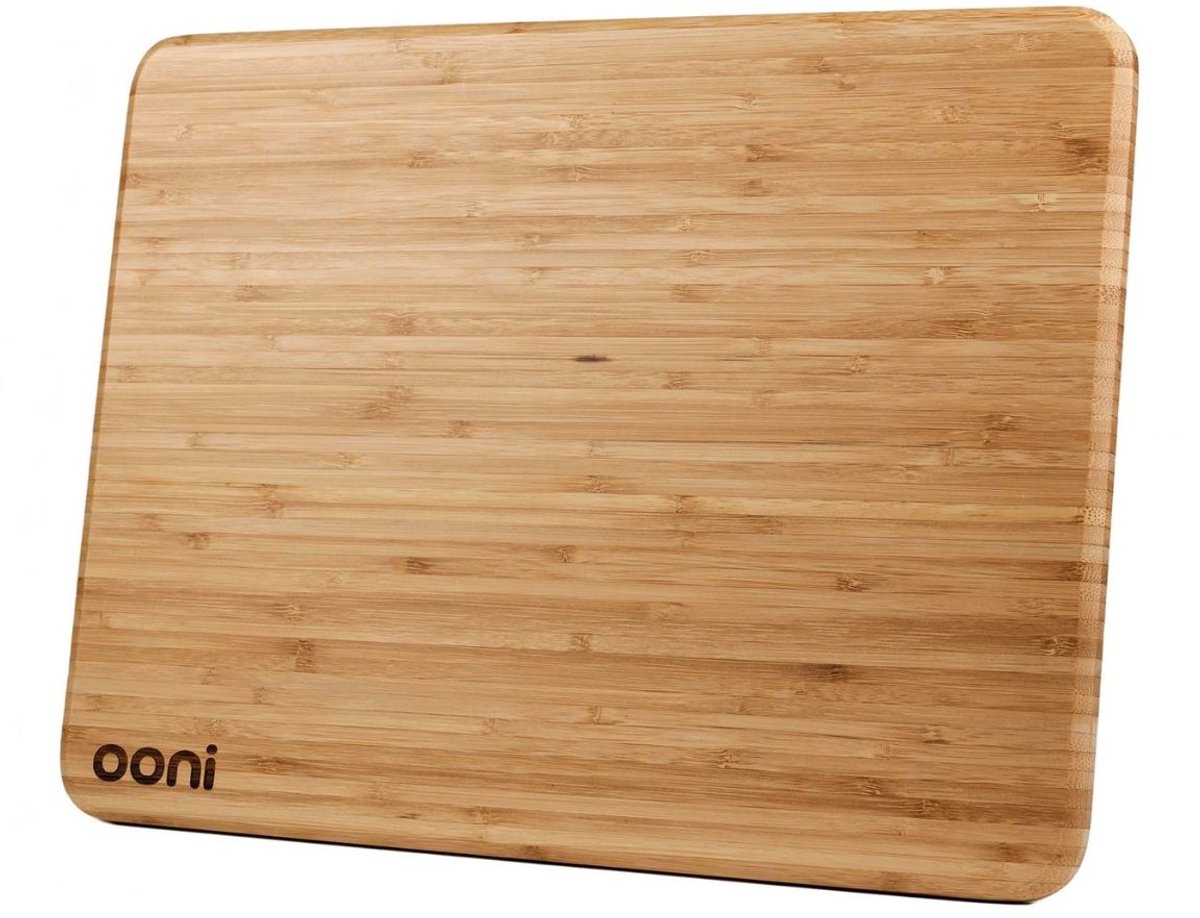
Lay the opened disc on a lightly dusted peel, top it there, and be quick about it. Shake the peel once before you start: if it does not slide now, it will not slide later, and now you can still free it.
Use semola or fine semolina on the peel rather than flour. They are little spheres that work like ball bearings, while flour absorbs moisture and starts sticking. Too much of it does burn on the stone, so keep it thin.
Topped waiting does not exist. A pizza that sits on the peel for two minutes while you adjust the oven is not coming off it.
What goes wrong, and what it means
Base pale and floppy while the rim is done: the stone was not hot enough. Preheat longer, and measure the stone rather than the oven.
Base black in forty seconds: the stone was too hot. Turn the flame down and wait a few minutes; a stone cools more slowly than the flame does.
Dough springs back and will not grow: too cold, or it has not rested long enough. Put it back and wait twenty minutes.
No airy rim: too little rising time, too much yeast, or you flattened the rim while opening it. Check in that order.
Tough, leathery crust: usually too little hydration, or too long a bake at too low a temperature.
What you actually need
A scale, a peel, and flour that can take a long rise. In that order. Everything after that is convenience, not result.
An infrared thermometer earns its place sooner than most accessories, because stone temperature is the only number your pizza actually cares about, and it is not the same as what the oven reports.
Dough boxes are pleasant and they stack. A sealed plastic box does the same. A dough mixer is pure comfort: the hand work is ten minutes, once a week.