29 September 2026 · 8 min read
Your pizza sticks to the peel, and how to end that for good
Everyone who buys a pizza oven meets this once: the base is laid out perfectly, the oven is at four hundred degrees, and as you launch it the back edge catches. What lands in the oven is no longer a pizza. The annoying part is that the problem started minutes earlier, the moment you put the dough on the peel. Below is what goes wrong and the order in which to fix it.
The main cause is time
Dough sitting on a peel sticks. Not immediately, but within a minute or two: moisture from the dough soaks into the flour underneath, turning it from powder into glue.
That means the order of your actions matters more than your technique. Do not top the pizza on the peel while you are still looking for the sauce. Have everything ready (sauce, cheese, toppings, oven at temperature) and only then put the dough on the peel.
Aim for thirty to sixty seconds between laying it down and launching. Anyone who manages that solves nine out of ten sticking problems without changing anything else.
- Everything ready before the dough touches the peel.
- Top it in one minute, then launch immediately.
- Shake the peel after each addition: if it still moves, you are fine.
Which flour you use, and how much
Ordinary wheat flour works, but it burns quickly at four hundred degrees and gives a bitter, black base. Semolina is coarser and behaves like tiny rollers between dough and peel, which is why nearly every pizzaiolo uses it.
Rice flour is the third option: fine, almost tasteless, and the slowest of the three to burn. A mix of semolina and rice flour is a good combination at home.
More is not better. A thick layer bakes onto the stone and smokes, and the pizza does not slide any better for it. A thin, even layer across the whole peel is enough, and knock the excess off before you top it.
- Semolina or rice flour, not plain flour.
- A thin layer across the whole peel, no heaps.
- Knock the excess off before the sauce goes on.
- A mix of the two works best at home: semolina rolls, rice flour burns last.
Wet toppings are the second culprit
Fresh mozzarella is full of moisture, and that moisture runs through the sauce into the dough. Drain it in a sieve for at least twenty minutes, or pat it dry, or use fior di latte instead of buffalo mozzarella.
Sauce should be thin and sparing. Two to three tablespoons for a thirty-centimetre pizza, with the rim left clear. More sauce does not give more flavour but a wet base that stays put.
Vegetables with a lot of water (mushrooms, courgette, fresh tomato) are better cooked or grilled briefly first. Raw on the pizza they release their moisture at exactly the moment you cannot use it.
The peel itself
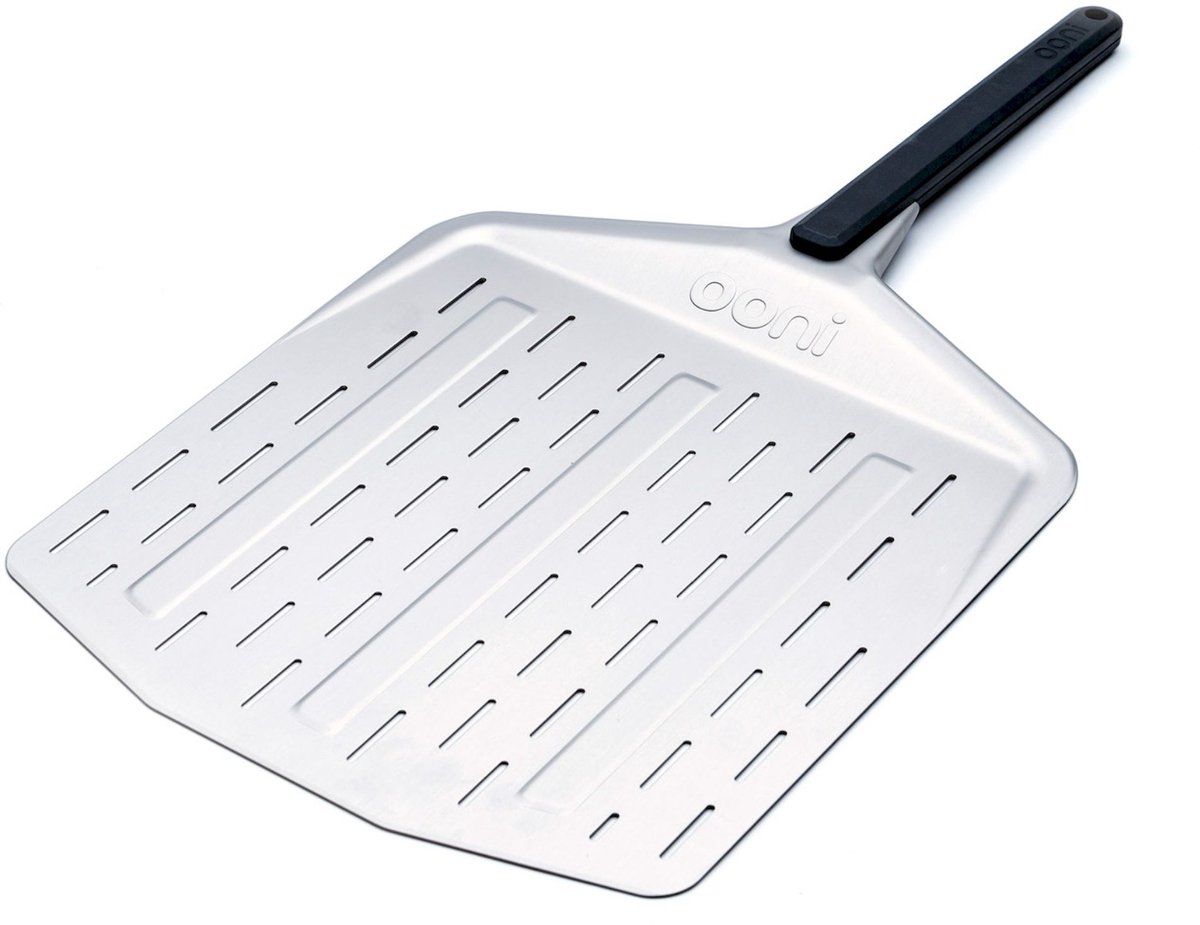
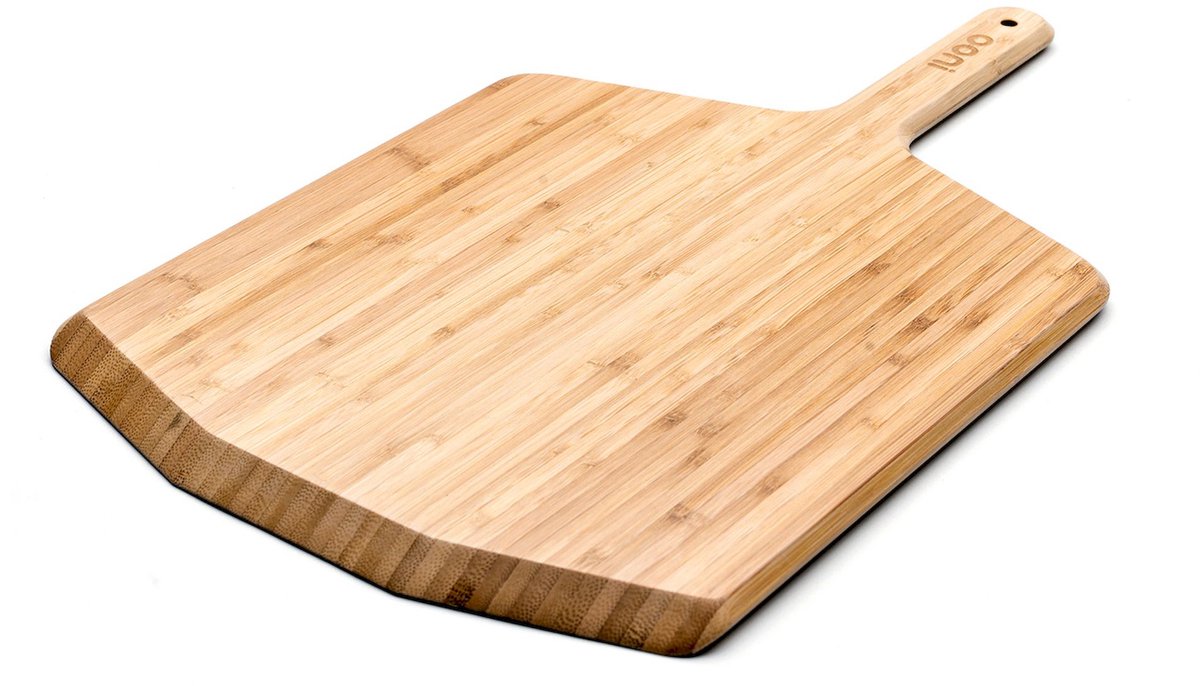
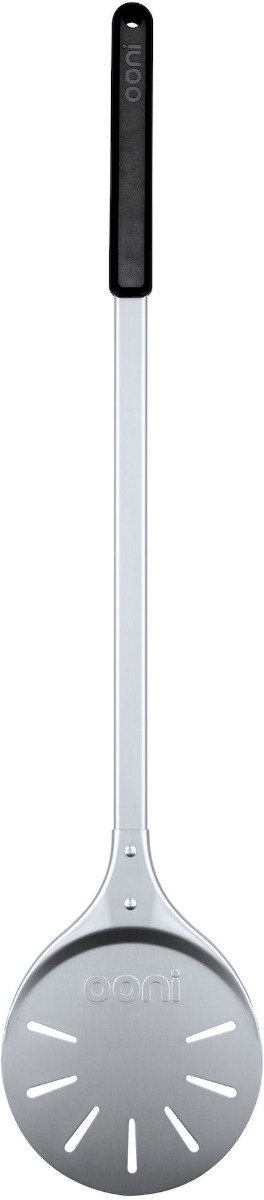
A wooden peel to launch with and a metal one to turn and retrieve. That is the combination most people end up with. Wood is rougher and so sticks less; thin metal slides more easily under a pizza that is already baking.
If you only have one, choose wood or a perforated metal peel. Those holes let excess flour fall through and reduce the contact area, and that shows.
Keep the peel clean and dry. Baked-on dough from the last pizza is a catch point, and a damp peel sticks from the first second.
The launching movement
Launch with a flat, quick motion: peel almost horizontal on the stone, a short push forward, then decisively back. Do not tilt and do not waggle. A tilted peel drops the front while the back is still stuck, which is exactly the fold you were trying to avoid.
Always test first. Give the peel a small jerk before it goes in the oven: if the pizza moves with it, you are good. If it holds, lift the edge with your fingers and scatter some semolina underneath.
If it is truly stuck fast, do not rescue it on the stone. Slide it back onto the worktop, re-flour the peel and lay it down in one movement.
- Jerk it before the oven: if it moves, you are fine.
- Launch flat, do not tilt.
- If it drags: lift the edge and get flour underneath before trying anything else.
- Stuck? Back to the worktop, flour again.
When it goes wrong anyway
A pizza that lands half folded on the stone can often still be pulled apart in the first seconds with a metal peel or tongs. Acting fast helps: after thirty seconds the dough has set.
If dough is left on the stone, let it burn off rather than scraping it out. At four hundred degrees it is ash within minutes, which you sweep out once the oven is cold.
And for the next attempt, consider a slightly smaller ball or slightly less wet dough. Hydration above seventy percent bakes beautifully but is harder to move, and that is a fine trade to make later rather than now.